
Taranto 1/200
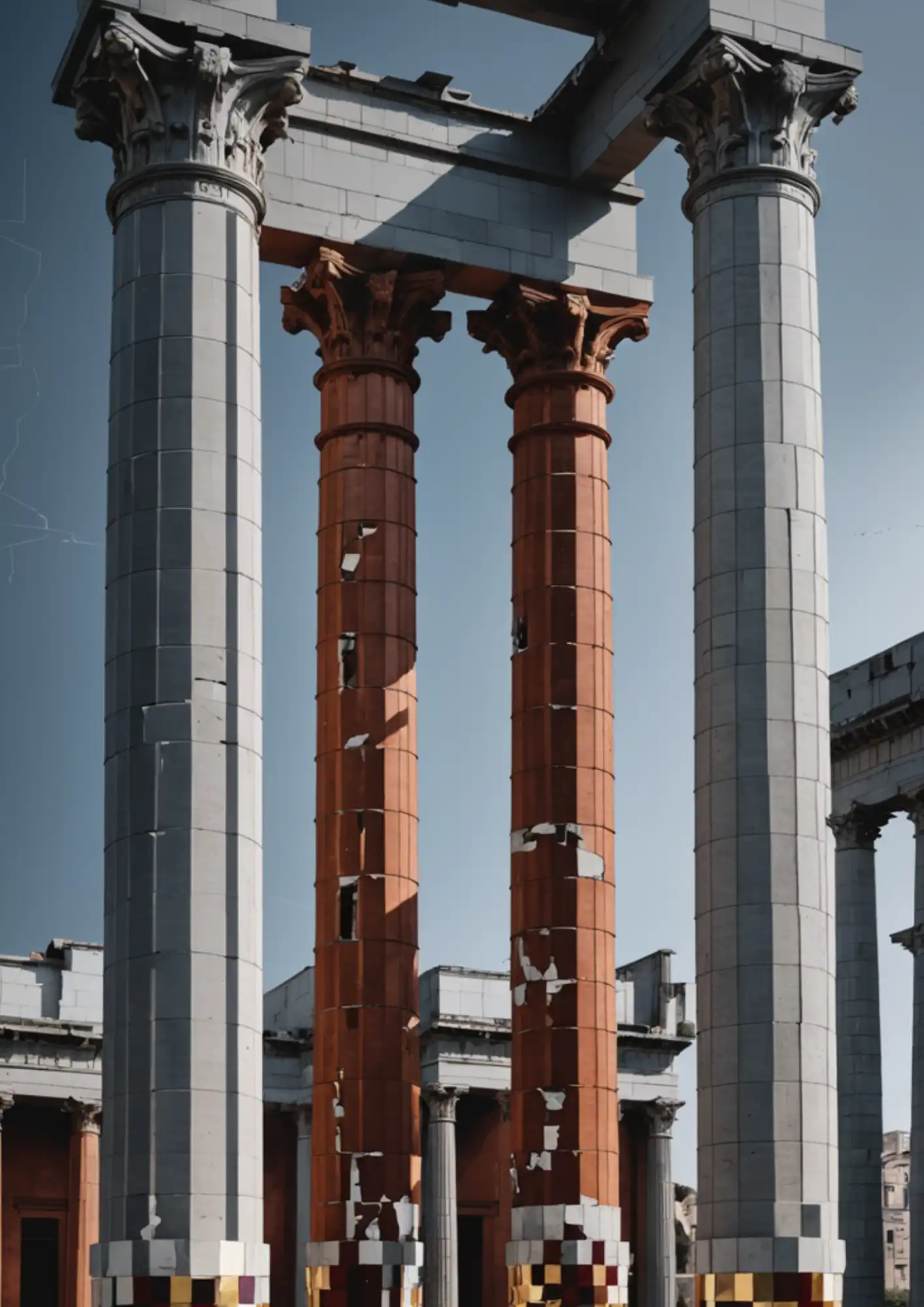

Doric Temple
Try to imagine if in the pixels imprinted on the icon The Doric temple was not just a fragment of ancient architecture, but a system of suspended forces, a balance that resists between what has remained and what has been lost.The columns rise like pure vectors, vertical lines that seek the sky, but at the same time they seem to vibrate, crack, as if the Doric perfection were crossed by an internal tension.The color insinuates itself into the stone, transforming the material into fragmented light, and what was once absolute order now becomes an open field, a space of interpretation.In this vision, the city of Taranto emerges as a connection point between worlds, heir to Magna Graecia and guardian of a memory that continues to be reflected in its forms.Yet what we observe is not just ruin, but the residue of a structured thought, of a civilization that saw architecture as the visible translation of cosmic harmony.The Doric order, with its essentiality and rigor, embodied an idea of measure and proportion that had its roots in Greek philosophy, where the relationship between the parts defined the meaning of the whole.It is as if among these columns one can still perceive the echo of the Spartan colonies that founded Taranto, bringing with them a cultural and political model based on discipline, balance and collective identity.